
The Quote
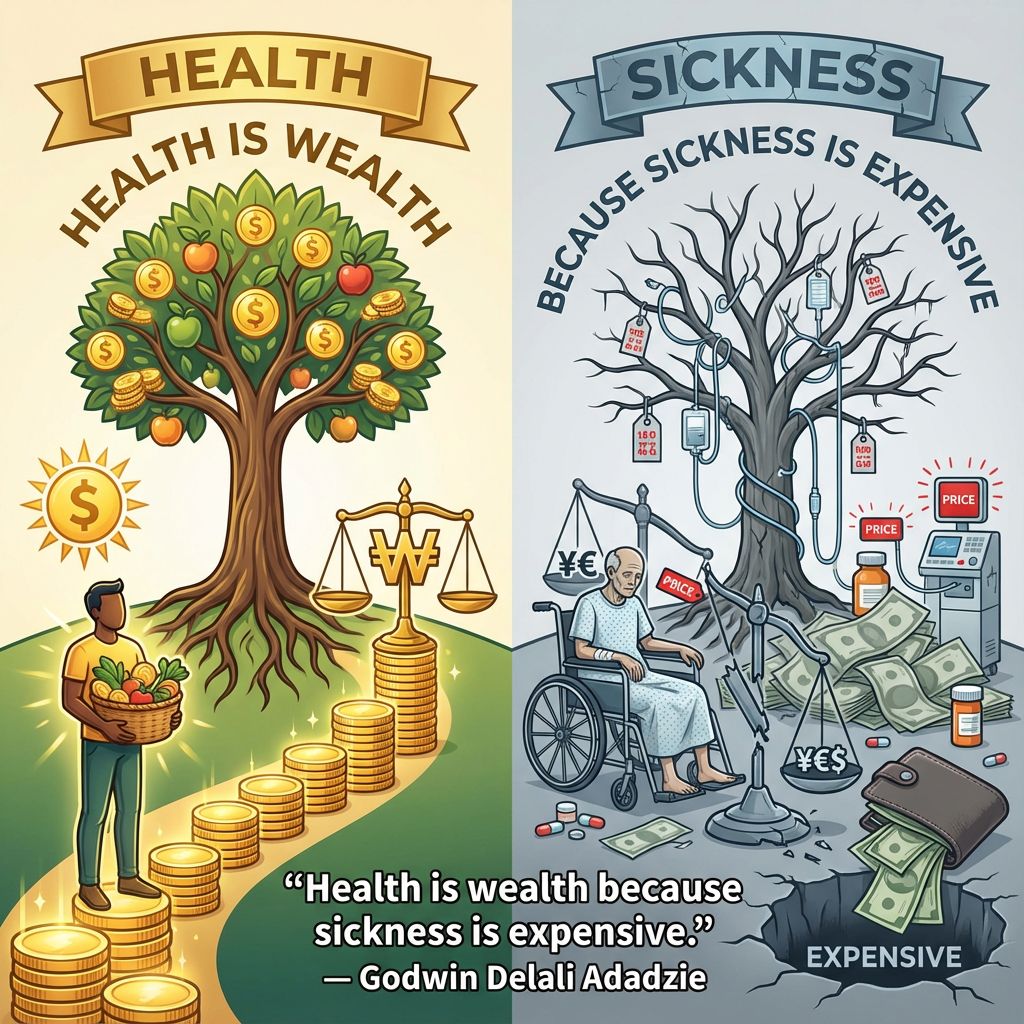
“Health is wealth because sickness is expensive.”
— Godwin Delali Adadzie
Context and Inspiration
This reflection addresses a truth most people don’t fully appreciate until they’ve experienced significant illness: health is a form of wealth that we often take for granted until it’s gone. The observation isn’t just about medical bills, though those can be crushing. It’s about the total cost of sickness—financial, emotional, relational, professional, and spiritual. When someone is healthy, they rarely calculate what that health is worth or what they’d pay to maintain it. But when sickness strikes, suddenly the full price becomes clear. Lost wages, medical expenses, medications, treatments, missed opportunities, strained relationships, diminished quality of life, inability to work or serve or enjoy simple pleasures—these costs accumulate rapidly and devastate more than just bank accounts. Understanding that health itself is a valuable asset worthy of investment and protection changes how people make daily choices about diet, exercise, rest, stress management, and preventive care.
The Financial Cost of Sickness
Let’s start with the most obvious expense—money:
Medical Bills: In many countries, healthcare costs can bankrupt families. Even with insurance, co-pays, deductibles, and out-of-pocket maximums add up quickly.
A serious illness can cost tens or hundreds of thousands of dollars. Cancer treatment, major surgery, chronic disease management, emergency care—these drain savings and create debt.
Medications: Prescription drugs for chronic conditions cost hundreds or thousands monthly. Some people pay more for medications than for food or housing.
Lost Income: When you’re sick, you often can’t work. Lost wages from missed days, reduced hours, or permanent disability can exceed direct medical costs.
If you’re self-employed or lack sick leave, every day of illness means zero income plus mounting expenses.
Long-term Care: Serious illness can require ongoing care—home health aides, nursing facilities, specialized equipment. These costs continue for months or years.
Opportunity Costs: Money spent on sickness can’t be invested, saved for retirement, used for education, or spent on other goals. The future cost compounds.
Family Impact: When one person is sick, family members often reduce work hours to provide care, further reducing household income.
Proverbs 13:11 says: “Wealth gained hastily will dwindle, but whoever gathers little by little will increase it.” But sickness can eliminate wealth that took years to build.
The Time Cost of Sickness
Money isn’t the only thing sickness costs:
Hours Lost: Doctor appointments, treatments, pharmacy visits, hospital stays, recovery time—these consume hours that could have been spent working, serving, creating, or enjoying life.
Productive Years Lost: Chronic illness or disability can eliminate decades of productive life. Early death cuts life short entirely.
Delayed Dreams: Health problems force postponement of plans—education, career moves, travel, ministry, relationships. Sometimes “later” never comes.
Caregiver Time: Family members sacrifice their time to care for sick loved ones. This time has value, even when no direct cost appears.
Psalm 90:12 prays: “Teach us to number our days, that we may gain a heart of wisdom.” Sickness forces us to confront how limited our days are.
The Energy Cost of Sickness
Health provides energy. Sickness depletes it:
Physical Exhaustion: Illness drains physical strength. Simple tasks become difficult. Basic self-care requires enormous effort.
Mental Fatigue: Chronic pain, medications, and the stress of being sick cloud thinking and reduce mental capacity.
Emotional Drain: Dealing with illness is emotionally exhausting. Fear, frustration, discouragement, and grief over what’s lost all take energy.
No Reserves: When you’re sick, you have no margin for anything beyond managing the illness. Everything else suffers.
Isaiah 40:29 promises: “He gives strength to the weary and increases the power of the weak.” But God’s design is that health itself provides strength for daily living.
The Relational Cost of Sickness
Sickness affects relationships profoundly:
Strain on Marriage: Illness stresses marriages. Healthy spouses become caregivers. Intimacy suffers. Roles shift. Financial pressure increases. Not all marriages survive serious illness.
Parent-Child Impact: Sick parents can’t parent as fully. Sick children require enormous parental energy and resources. Both situations strain family bonds.
Lost Friendships: Some friends disappear when you’re sick. They don’t know what to say or do. They’re uncomfortable with your limitations. Relationships that seemed solid prove shallow.
Social Isolation: Sickness often means staying home, missing gatherings, being unable to maintain normal social life. Loneliness compounds suffering.
Dependency: Needing help with basic tasks when you were once independent damages self-image and strains relationships.
Proverbs 17:17 says: “A friend loves at all times, and a brother is born for a time of adversity.” Sickness reveals which relationships are real.
The Professional Cost of Sickness
Career impact from illness can be massive:
Missed Opportunities: Promotions go to healthy people who can commit fully. Projects get reassigned. Opportunities pass to others.
Career Disruption: Extended illness can end careers entirely. Skills become outdated during recovery. Gaps on resumes raise questions.
Reduced Performance: Even when working, sick people often perform below their capability. This affects advancement and income.
Discrimination: Though illegal, health-based discrimination exists. Employers hesitate to hire or promote people with serious health conditions.
Premature Retirement: Illness forces some to retire early, reducing lifetime earnings and retirement savings.
Professional Identity Loss: For people whose identity is tied to their work, illness that prevents working creates existential crisis.
Ecclesiastes 9:10 advises: “Whatever your hand finds to do, do it with all your might.” But sickness reduces the “might” you can bring to work.
The Spiritual Cost of Sickness
Illness affects spiritual life too:
Questioning God: Serious illness often triggers questions about God’s goodness, justice, or presence. Some people’s faith strengthens through illness. Others lose faith entirely.
Inability to Serve: Sickness limits ability to serve in ministry, help others, or participate in church community. This loss of purpose hurts.
Prayer Struggles: Pain, medication, exhaustion, and spiritual confusion can make prayer difficult when you need it most.
Worship Interruption: Physical inability to attend church, sing, stand, or focus during worship reduces that source of spiritual nourishment.
Bible Reading Difficulty: Illness can make concentration impossible. The spiritual food you need becomes inaccessible.
Job’s suffering included spiritual anguish: “I cry out to you, God, but you do not answer” (Job 30:20). Physical suffering often includes spiritual suffering.
Why Health Is Wealth
Given all these costs, health itself is a form of wealth:
Health Enables Earning: You can work when you’re healthy. You can’t work (or work fully) when you’re sick. Health is the foundation of earning capacity.
Health Enables Serving: Ministry, helping others, caring for family—all require health. Sickness limits what you can do for others.
Health Enables Enjoying: Travel, hobbies, time with loved ones, physical activities—health makes these possible. Sickness steals enjoyment.
Health Enables Learning: Education and skill development require energy and focus that sickness diminishes.
Health Enables Relationships: Being fully present with others requires health. Sickness makes you self-focused by necessity.
Health Enables Everything: Almost everything worthwhile in life is easier when you’re healthy and harder or impossible when you’re sick.
3 John 1:2 says: “Dear friend, I pray that you may enjoy good health and that all may go well with you, even as your soul is getting along well.” Health and general wellbeing are connected.
The Biblical View of Health
Scripture consistently treats health as valuable:
Bodies as Temples (1 Corinthians 6:19-20): “Do you not know that your bodies are temples of the Holy Spirit, who is in you, whom you have received from God? You are not your own; you were bought at a price. Therefore honor God with your bodies.”
Your body matters. Caring for it honors God.
Moderation and Discipline (1 Corinthians 9:27): Paul wrote: “I strike a blow to my body and make it my slave so that after I have preached to others, I myself will not be disqualified for the prize.”
Self-control regarding the body is part of Christian discipline.
Rest Is Commanded (Exodus 20:8-10): The Sabbath command includes physical rest. God designed bodies to need rest and built it into His law.
Jesus Healed (Matthew 4:23): Jesus spent significant ministry time healing the sick. He valued health and restoration.
Wisdom Preserves Health (Proverbs 3:7-8): “Do not be wise in your own eyes; fear the Lord and shun evil. This will bring health to your body and nourishment to your bones.”
Wisdom and health connect. Foolish living damages health.
Investing in Health
If health is wealth, we should invest in maintaining it:
Proper Nutrition: What you eat affects long-term health dramatically. Poor diet causes obesity, diabetes, heart disease, and numerous other conditions.
You can pay for healthy food now or pay for disease treatment later. The first costs less.
Regular Exercise: Bodies are designed for movement. Sedentary life creates health problems. Exercise prevents diseases, maintains strength, supports mental health, and extends healthy years.
Adequate Sleep: Chronic sleep deprivation damages health in countless ways—weakened immune system, mental health problems, increased disease risk, reduced cognitive function.
Sleep isn’t laziness—it’s essential maintenance.
Stress Management: Chronic stress destroys health. It causes high blood pressure, heart disease, mental health disorders, weakened immunity, and shortened lifespan.
Managing stress through prayer, rest, healthy boundaries, and recreation is health investment.
Preventive Care: Regular checkups, screenings, and dental care catch problems early when they’re easier and cheaper to treat.
Avoiding the doctor to save money often costs more when untreated problems become serious.
Avoiding Harmful Substances: Smoking, excessive alcohol, drugs, and other harmful substances destroy health. The temporary pleasure costs enormous health wealth.
Mental Health Care: Mental health is health. Therapy, medication when needed, and addressing mental health struggles prevent them from destroying physical health too.
Proverbs 4:23 instructs: “Above all else, guard your heart, for everything you do flows from it.” Guarding your heart includes mental and emotional health.
When Health Wealth Is Lost
Despite best efforts, sickness sometimes comes:
Don’t Blame Yourself: Not all illness is preventable. Job was blameless yet suffered terribly (Job 1:1, 1:8). Sometimes sickness just happens.
Focus on What You Can Control: You can’t always control outcomes, but you can control responses—following medical advice, maintaining hope, accepting help, staying connected to God.
Find New Ways to Contribute: Illness changes what you can do but doesn’t eliminate your value. Find ways to serve, love, and contribute within your limitations.
Accept Help: Receiving is hard for independent people, but accepting help with grace blesses both giver and receiver.
Maintain Hope: Medical situations change. New treatments emerge. Remission happens. Miracles occur. But even if physical healing doesn’t come, hope in God’s goodness and eternal restoration remains valid.
Remember the Eternal Perspective: Paul wrote: “Therefore we do not lose heart. Though outwardly we are wasting away, yet inwardly we are being renewed day by day. For our light and momentary troubles are achieving for us an eternal glory that far outweighs them all” (2 Corinthians 4:16-17).
Physical health is temporary regardless. Eternal life is permanent.
Caring for Others’ Health
Understanding health as wealth should change how we treat others:
Take Illness Seriously: Don’t minimize others’ sickness. Don’t give simplistic advice. Don’t suggest they just need more faith or better attitude.
Offer Practical Help: Sick people need meals, rides to appointments, childcare, housework help, errands run. Practical assistance matters more than words.
Be Patient: Illness changes people. Pain makes people irritable. Medication affects mood. Limitation creates frustration. Extend grace.
Stay Present: Don’t disappear when someone gets sick. Show up. Stay in touch. Be consistent.
Support Caregivers: Family members caring for sick loved ones are exhausted and stressed. Help them too.
Advocate: Sometimes sick people need someone to speak up for them, navigate systems, ask questions, or challenge inadequate care.
Romans 12:15 commands: “Rejoice with those who rejoice; mourn with those who mourn.” When someone loses health wealth, mourn with them.
The Ultimate Healing
All earthly health is temporary. Eventually, everyone’s health fails and everyone dies. But for believers, better health comes:
Resurrection Bodies: 1 Corinthians 15:42-44 describes resurrection bodies as imperishable, glorious, powerful, and spiritual. Perfect health forever.
No More Sickness: Revelation 21:4 promises: “He will wipe every tear from their eyes. There will be no more death or mourning or crying or pain, for the old order of things has passed away.”
Perfect Wholeness: Every disability, disease, injury, and weakness will be gone. Complete restoration. Eternal vitality.
The Tree of Life: Revelation 22:2 describes the tree of life whose leaves are “for the healing of the nations.” Perfect health in perfect environment.
This hope doesn’t minimize present suffering, but it provides perspective. Current health problems are temporary. Perfect health is coming and will last forever.
Practical Wisdom
Some practical applications of this truth:
Don’t Take Health for Granted: If you’re healthy today, thank God. Don’t assume it will last. Use your healthy years wisely.
Make Health-Promoting Choices: Small daily decisions compound. Choose movement over sitting. Choose nutritious food over junk. Choose sleep over late-night scrolling. Choose stress reduction over constant rushing.
Prioritize Prevention: It’s cheaper and easier to maintain health than restore it. Invest in prevention now.
Build Margin: Financial margin helps when sickness comes. Save emergency funds. Get adequate insurance if possible. Don’t live paycheck to paycheck.
Value Time: Health gives you time. Use it well. Don’t waste healthy years on things that don’t matter.
Serve While You Can: Your health enables service. Use it to help others while you’re able.
Trust God More Than Health: Even as you steward health, remember your ultimate security is in God, not in your physical condition.
Reflection Questions
- Do you treat health as wealth, or do you take it for granted?
- What health-promoting choices could you make consistently that you’re currently neglecting?
- If illness struck tomorrow, how would your life change? What would you lose?
- Are you investing in maintaining health, or are you living in ways that damage it?
- How do you respond to others’ illness? Are you patient, practical, and present?
- Where does your ultimate security lie—in your health or in God?
Related Quotes
- “Everything is expensive. You just pay for it now or later.”
- “Something no matter how small is better than nothing.”
- “Life itself is the seesaw. It comprises of ups and downs.”
Want to learn to value and protect your health? Explore my books on faith and practical wisdom, discover more quotes and reflections, or read more articles on living wisely.
Disclaimer: Adadzie.com is the personal website of Godwin Delali Adadzie. Content represents personal views and does not constitute official Catholic teaching, pastoral counseling, or professional advice. Quotes and reflections are shared for inspiration and reflection. For personal guidance, consult appropriate professionals. Questions? Email delali@adadzie.com | Read Full Disclaimer