
The Quote
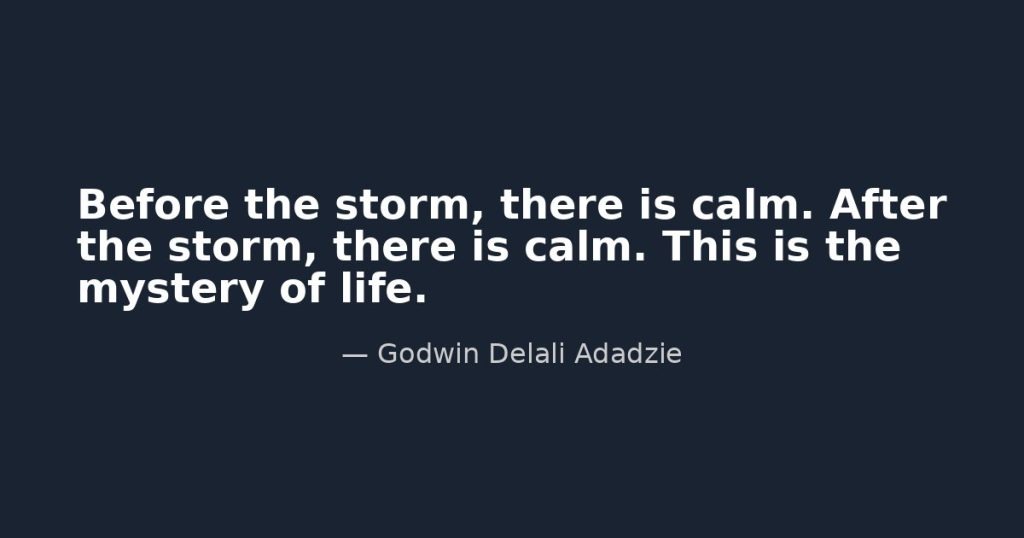
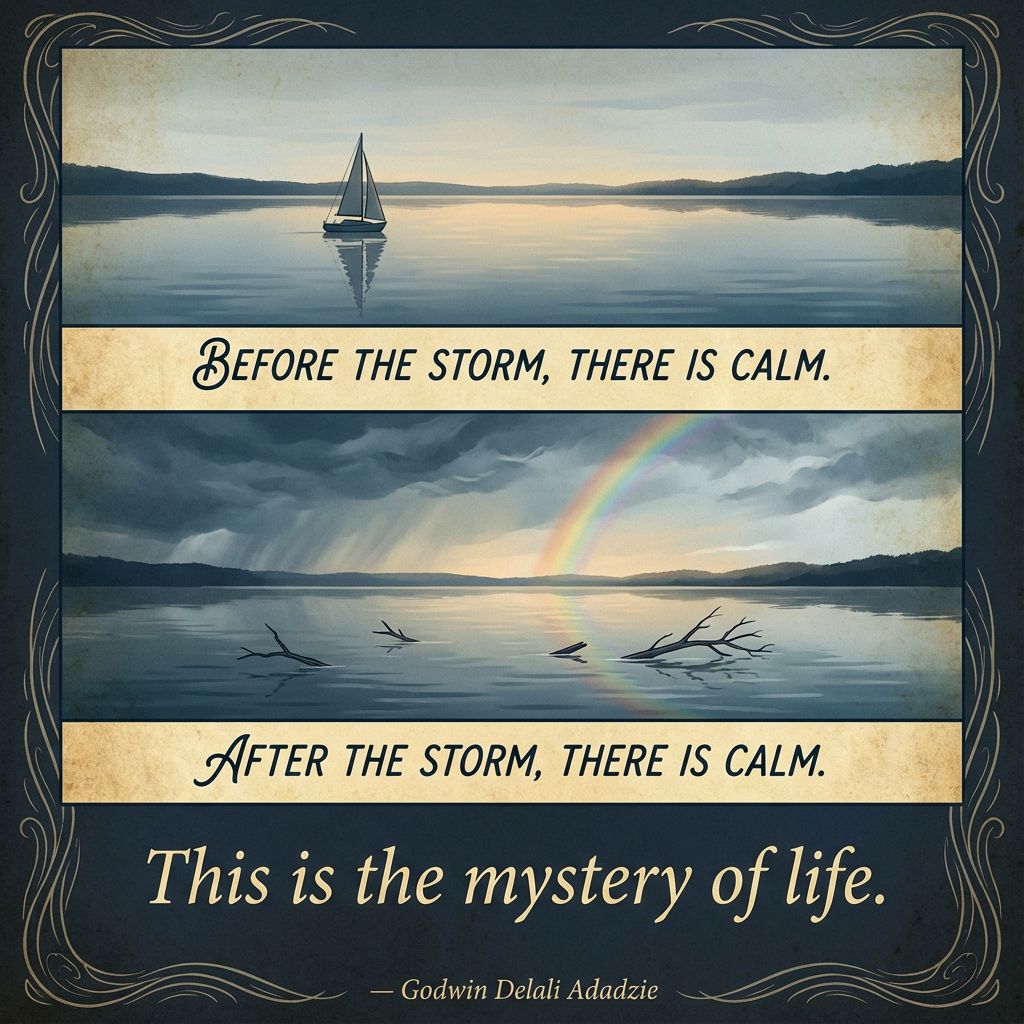
“Before the storm, there is calm. After the storm, there is calm. This is the mystery of life.”
— Godwin Delali Adadzie
Context and Inspiration
This reflection addresses the cyclical nature of human experience that many people fail to recognize until they’ve lived through several seasons. The observation captures both a meteorological reality and a profound spiritual truth: storms are temporary, bracketed by periods of peace on both sides. When people are in the calm before a storm, they often take peace for granted, assuming it will last forever. When they’re in the middle of a storm, they can’t imagine it will ever end. And when they’ve survived a storm and reached the calm after, they’re often surprised by both the peace and the fact that they made it through. Understanding this pattern—that storms come and go but calm returns—provides hope during crisis, wisdom during prosperity, and perspective across the whole span of life. The mystery isn’t that storms happen, but that peace bookends them, that survival is possible, and that the rhythm continues throughout our earthly existence.
The Pattern in Nature
The quote begins with a natural phenomenon that anyone who’s watched weather can observe:
Before a Storm: There’s often an eerie stillness. The air becomes heavy. Birds stop singing. The wind dies down. Experienced observers recognize this unnatural quiet as a warning—something is coming.
The Storm Itself: Then comes the wind, rain, thunder, lightning. Everything that was calm becomes chaotic. The stillness explodes into violence.
After the Storm: Eventually—always eventually—the storm passes. The rain stops. The wind calms. The clouds break. The sun emerges. A different kind of calm returns, often cleaner and clearer than before.
This is predictable, reliable, observable. Storms don’t last forever. They can’t. The atmospheric conditions that create them are temporary.
But most people don’t apply this natural pattern to their lives. They act as if storms are permanent and calm is accidental.
The Pattern in Scripture
The Bible is full of examples of this calm-storm-calm pattern:
Joseph (Genesis 37-50): The calm of his father’s favorite son. The storm of betrayal, slavery, false accusation, and imprisonment. The calm of being second in Egypt, reunited with family.
Job (Job 1-42): The calm of prosperity, family, and blessing. The storm of losing everything—children, wealth, health. The calm of restoration with even more than before.
David (1 Samuel 16 – 2 Samuel 5): The calm of shepherd boy anointed as future king. The storm of years fleeing from Saul, living in caves, constantly in danger. The calm of finally taking the throne.
The Disciples (Matthew 14:22-33): The calm of evening as they set out across the sea. The storm that threatened to sink them. The calm when Jesus spoke peace to the wind and waves.
Paul (Acts 27-28): The calm of sailing toward Rome. The violent storm and shipwreck. The calm of safety on Malta and eventually reaching Rome.
The Church (Acts 8-9): The calm of growth in Jerusalem. The storm of persecution scattering believers. The calm of the church spreading and multiplying through the persecution.
In every case, the storm was real, intense, and frightening. But it was also temporary. Calm came before. Calm came after. The storm was a season, not a permanent state.
The Calm Before the Storm
Understanding the calm before a storm carries important implications:
Don’t Take Peace for Granted: When life is smooth, it’s tempting to assume it will stay that way. But Scripture warns: “When people are saying, ‘Peace and safety,’ destruction will come on them suddenly” (1 Thessalonians 5:3).
This isn’t pessimism—it’s realism. Storms will come. Use peaceful seasons to prepare.
Build During Calm Seasons: Jesus told the parable of the wise and foolish builders (Matthew 7:24-27). Both built houses. Both faced storms. The difference? The foundation they built during calm weather.
The wise builder used calm seasons to build on rock. When the storm came, the house stood. The foolish builder built quickly on sand. When the storm came, it collapsed.
You don’t build strong foundations during storms—you build them during calm. You develop character, establish habits, deepen relationships, and grow faith when things are peaceful, so those things sustain you when crisis comes.
Store Resources: Joseph interpreted Pharaoh’s dream: seven years of plenty followed by seven years of famine (Genesis 41). During the abundant years, they stored grain. That storage saved Egypt and surrounding nations during famine.
Financial margin, emotional reserves, strong relationships, spiritual depth—these are built during calm seasons and drawn on during storms.
Recognize Warning Signs: Experienced people learn to read warning signs. The unusual calm that precedes a storm. The small indicators that trouble is brewing.
Wisdom pays attention. When relationships start showing stress, when finances begin tightening, when spiritual life feels dry, when physical health gives subtle warnings—these are signs to prepare.
Appreciate What You Have: When life is calm, practice gratitude. Don’t waste peaceful seasons wishing for more excitement or taking blessings for granted.
Psalm 23:2 says: “He makes me lie down in green pastures, he leads me beside quiet waters.” God gives rest. Receive it with thanksgiving.
The Storm Itself
When you’re in the middle of a storm, several truths become vital:
Remember: This Is Temporary: The hardest part of being in a storm is feeling like it will never end. But storms always pass. Always.
Psalm 30:5 promises: “Weeping may stay for the night, but rejoicing comes in the morning.” The night feels long, but morning comes.
The Storm Has Limits: God sets boundaries even on trials. Job’s suffering was severe but limited—Satan could only go so far (Job 1:12, 2:6). Paul wrote: “No temptation has overtaken you except what is common to mankind. And God is faithful; he will not let you be tempted beyond what you can bear” (1 Corinthians 10:13).
You might feel you can’t survive, but God knows your capacity. He won’t allow more than you can endure with His help.
Don’t Make Permanent Decisions in Temporary Storms: Many people make their worst decisions during storms—quitting jobs hastily, ending relationships impulsively, making rash vows, abandoning faith.
Wait. Storms cloud judgment. Make survival decisions (what do I need to do right now to get through this?), but postpone major life decisions until the storm passes and you can think clearly.
Storms Reveal What’s Real: Adversity exposes what’s actually in your heart. It shows which relationships are genuine, which beliefs are solid, what you really value.
Jesus said storms reveal what kind of foundation you built on (Matthew 7:25). This revelation, though painful, is valuable.
God Is in the Storm: When the disciples thought they were perishing in the storm, Jesus was there—walking on the water toward them (Matthew 14:25-27). When you feel most alone, God is present.
Psalm 46:1 declares: “God is our refuge and strength, an ever-present help in trouble.”
Storms Produce Growth: James 1:2-4 says: “Consider it pure joy, my brothers and sisters, whenever you face trials of many kinds, because you know that the testing of your faith produces perseverance. Let perseverance finish its work so that you may be mature and complete, not lacking anything.”
Storms aren’t enjoyable, but they’re productive. They develop character, deepen faith, and produce strength that calm seasons can’t create.
The Calm After the Storm
When you emerge from a storm, new realities appear:
Gratitude Deepens: You appreciate calm in ways you didn’t before the storm. Peace feels precious because you remember chaos. Health is valued because you remember sickness. Relationships are treasured because you remember loss.
Perspective Changes: What worried you before the storm often seems trivial after. Priorities clarify. What matters becomes obvious. What doesn’t matter becomes apparent.
Strength Has Grown: You’re not the same person who entered the storm. You’ve developed muscles you didn’t have before—endurance, patience, faith, courage.
Scars Remain: The storm’s effects don’t completely disappear. You might have scars—physical, emotional, financial, relational. But scars are proof of survival, not signs of failure.
Paul listed his hardships not with shame but as evidence of endurance (2 Corinthians 11:23-29). Scars tell stories of battles survived.
Compassion Increases: Having survived a storm makes you more compassionate toward others in storms. You understand suffering differently. You can comfort others with the comfort you received (2 Corinthians 1:3-4).
Fear of Future Storms Decreases: Once you’ve survived a storm, future storms are less terrifying. You know storms end. You know you can survive. You know God is faithful.
This doesn’t mean you seek storms, but you don’t dread them as much.
Rest Becomes Possible: After intense struggle, rest feels earned and necessary. God gives seasons of rest after seasons of trial.
Jesus told His disciples: “Come with me by yourselves to a quiet place and get some rest” (Mark 6:31). After ministry storms, He provided rest.
The Mystery
The quote calls this pattern “the mystery of life.” What’s mysterious about it?
The Unpredictability: You can’t predict exactly when storms will come, how severe they’ll be, or how long they’ll last. This uncertainty is part of living in a broken world.
Jesus said: “In this world you will have trouble” (John 16:33). Not “might have”—”will have.” But also: “But take heart! I have overcome the world.”
The Necessity: Why does God allow storms? Why doesn’t He just give us permanent calm? This is part of the mystery.
Storms serve purposes we don’t always understand. They discipline us (Hebrews 12:5-11), develop us (Romans 5:3-5), redirect us (Jonah), humble us (2 Corinthians 12:7-10), or accomplish purposes beyond our comprehension (Job 38-41).
The Survival: How do people endure storms that seem unbearable? The human capacity for survival is mysterious. People endure losses that should break them yet somehow continue.
This isn’t just human resilience—it’s God’s sustaining grace. “My grace is sufficient for you, for my power is made perfect in weakness” (2 Corinthians 12:9).
The Restoration: How does calm return after devastating storms? How do people rebuild, heal, and find peace again? This is part of God’s redemptive work—bringing beauty from ashes (Isaiah 61:3).
The Rhythm Continues: Even after surviving multiple storms, the pattern continues. More calm, more storms, more calm. Why? What’s the purpose of this cycle?
Perhaps it’s to keep us dependent on God, to prevent us from settling into self-sufficiency, to continually develop us, or simply part of living in a world awaiting final redemption.
Living with Wisdom About Storms
Understanding this pattern should change how you live:
During Calm, Prepare: Build your spiritual foundation. Develop disciplines. Strengthen relationships. Build financial margin. Store up spiritual resources.
Don’t waste peace. Use it to prepare for the next storm.
During Storms, Endure: Remember storms end. Hold on to God. Don’t make rash decisions. Keep putting one foot in front of the other. Survival is victory.
After Storms, Rest and Restore: Don’t immediately rush into the next thing. Let yourself heal. Process what happened. Celebrate survival. Thank God for deliverance.
Always, Trust God: Whether calm or storm, God is sovereign, good, and faithful. He’s with you in both seasons.
Psalm 46:1-3 says: “God is our refuge and strength, an ever-present help in trouble. Therefore we will not fear, though the earth give way and the mountains fall into the heart of the sea, though its waters roar and foam and the mountains quake with their surging.”
Different Types of Storms
Storms come in various forms:
Health Crises: Sudden illness, chronic disease, injury, mental health struggles. These storms can be long and unpredictable.
Financial Storms: Job loss, business failure, economic downturns, unexpected expenses. These shake security and require trust in God’s provision.
Relational Storms: Divorce, betrayal, family conflict, loss of friendship. These wound the heart deeply.
Grief: Death of loved ones, loss of dreams, endings of chapters. These storms involve mourning and require time to heal.
Spiritual Storms: Doubt, feeling distant from God, spiritual attack, moral failure. These threaten the foundation of faith.
Circumstantial Storms: Legal troubles, natural disasters, accidents, circumstances beyond control. These remind us we’re not as in control as we think.
Each type of storm requires slightly different responses, but the pattern remains: storms come, storms pass, calm returns.
When the Storm Seems Permanent
Sometimes people get stuck in storms that seem to never end:
Chronic Illness: Some face health battles that don’t resolve in this life.
Persistent Poverty: Some struggle financially for decades despite faithful effort.
Ongoing Relational Conflict: Some family situations remain broken despite prayer and effort.
Long-term Singleness or Childlessness: Some deep desires remain unfulfilled for years or forever.
What then? Does the pattern fail?
No—but the understanding of “calm” must shift. The calm might not mean resolution of the problem but peace in the midst of it. Paul’s thorn in the flesh wasn’t removed, but God’s grace was sufficient (2 Corinthians 12:7-10).
Jesus promised: “Peace I leave with you; my peace I give you. I do not give to you as the world gives. Do not let your hearts be troubled and do not be afraid” (John 16:33).
This peace can exist even while circumstances remain difficult. It’s supernatural—the peace of God that “transcends all understanding” (Philippians 4:7).
And ultimately, the final calm comes not in this life but the next. Revelation 21:4 promises: “He will wipe every tear from their eyes. There will be no more death or mourning or crying or pain, for the old order of things has passed away.”
Hope in the Pattern
Understanding life’s rhythm of calm-storm-calm offers profound hope:
You’re Not Stuck: If you’re in a storm, it won’t last forever. Calm will come again.
You’re Not Alone: Everyone faces storms. This isn’t unique to you, nor is it punishment. It’s part of living in a fallen world.
You Can Survive: If others have survived storms, you can too. And more importantly, God will sustain you.
Growth Is Happening: Even if you can’t see it during the storm, you’re being shaped, strengthened, and prepared for what’s ahead.
God Is Faithful: He’s with you in calm and storm. He’s working even when you can’t see it. He’s good even when circumstances aren’t.
Better Is Coming: If not in this life, then in the next. But often in this life too—the calm after the storm often brings unexpected blessings.
Reflection Questions
- What season are you in right now—calm before, storm, or calm after? How does recognizing this help?
- If you’re in calm, are you using it wisely to prepare, or taking it for granted?
- If you’re in a storm, can you trust that it’s temporary even though it doesn’t feel that way?
- What storms have you survived in the past? How did God sustain you then?
- What have storms taught you that calm seasons couldn’t?
- How can you help someone else who’s currently in a storm?
Related Quotes
- “When the party is over, everyone leaves for their homes. This is the reality of life. You are left alone after all the merrymaking is over.”
- “If you don’t want to end up disappointed. Don’t get too excited too soon and don’t expect too much.”
- “Everything is expensive. You just pay for it now or later.”
Want to find peace in life’s storms and calm? Explore my books on faith and endurance, discover more quotes and reflections, or read more articles on navigating life’s seasons.
Disclaimer: Adadzie.com is the personal website of Godwin Delali Adadzie. Content represents personal views and does not constitute official Catholic teaching, pastoral counseling, or professional advice. Quotes and reflections are shared for inspiration and reflection. For personal guidance, consult appropriate professionals. Questions? Email delali@adadzie.com | Read Full Disclaimer