

The Quote
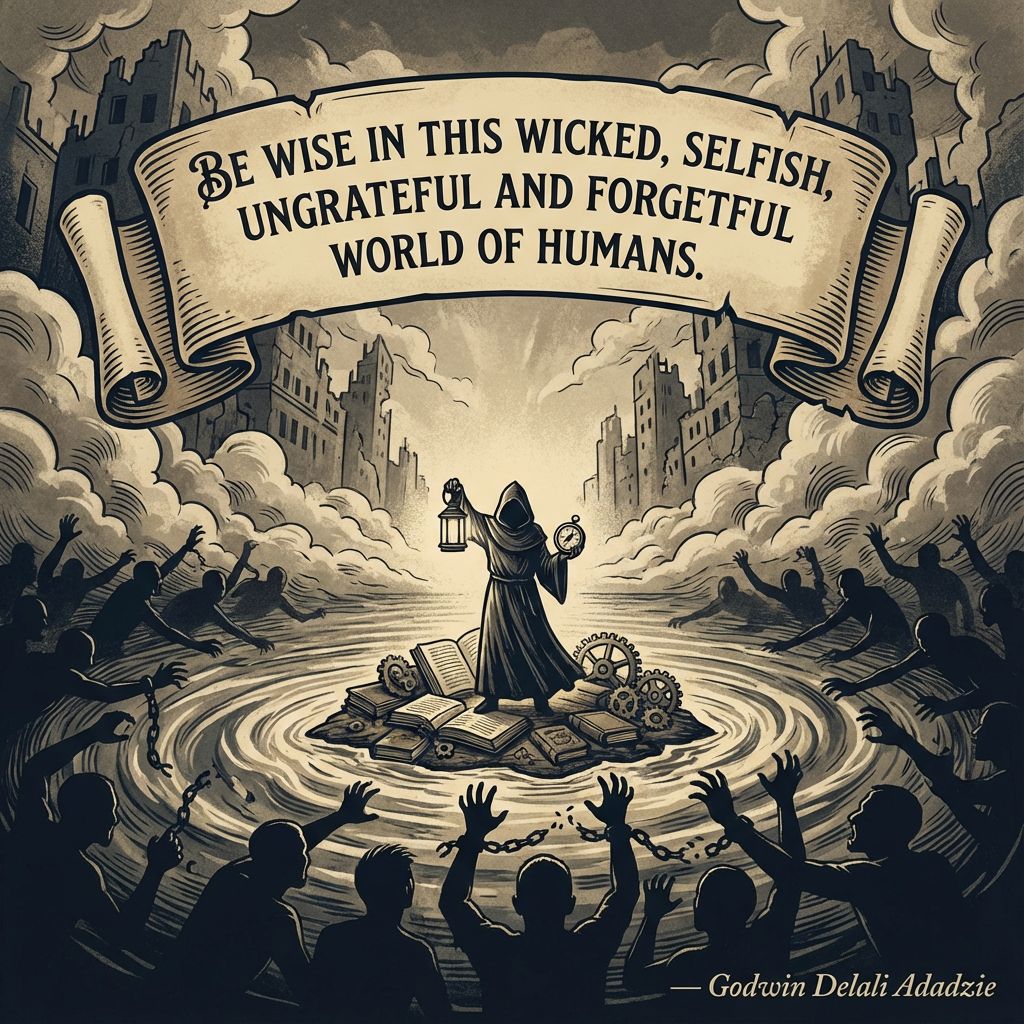
“Be wise in this wicked, selfish, ungrateful and forgetful world of humans.”
— Godwin Delali Adadzie
Context and Inspiration
This reflection addresses the tension between biblical idealism and practical realism. The observation doesn’t promote cynicism or hopelessness, but rather calls for clear-eyed wisdom about the reality of living in a fallen world. Many believers struggle because they expect the world to operate according to Christian principles when most people don’t share those values. They trust too easily, expect too much goodness, and end up wounded, disillusioned, or taken advantage of repeatedly. The call to “be wise” isn’t an invitation to become hard-hearted or suspicious of everyone, but rather to navigate reality as it actually is—not as we wish it were. Understanding that the world is marked by wickedness, selfishness, ingratitude, and forgetfulness helps us protect ourselves, set appropriate boundaries, make better decisions, and still love people without being destroyed by their failures.
The Reality of a Fallen World
Scripture is clear: the world is broken. Sin has corrupted everything, including human nature.
Paul wrote: “All have sinned and fall short of the glory of God” (Romans 3:23). This isn’t just theological theory—it’s observable reality.
Look around and you see:
- Wickedness: People doing evil deliberately, hurting others intentionally, choosing darkness over light
- Selfishness: People prioritizing their own interests at the expense of others, using people as tools
- Ingratitude: People forgetting kindness shown to them, taking blessings for granted, complaining despite abundance
- Forgetfulness: People forgetting promises made, lessons learned, help received, or warnings given
This is the world we live in. Not the world as God created it, but the world as sin has twisted it.
Jesus acknowledged this reality: “I am sending you out like sheep among wolves. Therefore be as shrewd as snakes and as innocent as doves” (Matthew 10:16).
Notice the balance: innocent as doves (maintaining purity, love, and goodness) but shrewd as snakes (understanding danger, protecting yourself, being smart about how you navigate a hostile environment).
What “Wicked” Means
Wickedness isn’t just occasional bad behavior. It’s the deliberate choice of evil, the pleasure taken in wrongdoing, the rejection of good.
Wickedness Exists: Some people aren’t just misguided or struggling—they’re actively malicious. They lie, manipulate, steal, abuse, and harm others knowingly and willingly.
Jesus said: “This is the verdict: Light has come into the world, but people loved darkness instead of light because their deeds were evil” (John 3:19). Some people prefer darkness.
Wickedness Can Appear Good: The most dangerous wickedness often wears a mask. False teachers appear as “angels of light” (2 Corinthians 11:14). Abusers present themselves as victims. Manipulators seem caring and helpful.
Wisdom means looking beyond appearances to see what’s actually happening.
Wickedness Escalates: Romans 1 describes a downward progression—people who reject God are given over to greater and greater corruption. Wickedness doesn’t stay static; it grows worse when unchecked.
You Must Recognize It: Many good-hearted Christians refuse to acknowledge wickedness when they encounter it. They make excuses, give endless chances, rationalize evil behavior.
But Proverbs 14:15 says: “The simple believe anything, but the prudent give thought to their steps.” Wisdom requires recognizing wickedness when you see it.
What “Selfish” Means
Selfishness is the default mode of fallen humanity. We’re born centered on ourselves and must be taught to consider others.
Most People Prioritize Themselves: This isn’t cynicism—it’s observation. Most people will choose their comfort over your need, their convenience over your crisis, their benefit over your wellbeing.
Paul described end-times people as “lovers of themselves, lovers of money… without love, unforgiving, slanderous, without self-control, brutal, not lovers of the good” (2 Timothy 3:2-3). But honestly, this describes most of human history.
Selfishness Masquerades as Self-Care: Modern culture has repackaged selfishness as virtue. “Do what’s best for you.” “Put yourself first.” “You don’t owe anyone anything.”
While boundaries and self-care have their place, much of what’s called self-care is just baptized selfishness—refusing responsibility, abandoning commitments, prioritizing comfort over character.
Selfishness Breaks Relationships: Marriages fail because spouses prioritize their own happiness over covenant. Friendships crumble because people give only when convenient. Churches split because members put preferences over unity.
Wisdom Adjusts Expectations: Understanding human selfishness means you don’t expect people to consistently put you first, sacrifice significantly for you, or maintain interest when it costs them.
This doesn’t mean you become selfish too. It means you’re not shocked or devastated when others act selfishly.
What “Ungrateful” Means
Ingratitude is rampant and painful, especially when you’ve been generous or sacrificial.
People Forget Quickly: Jesus healed ten lepers. Only one returned to thank Him (Luke 17:11-19). That’s a 10% gratitude rate.
You can help someone tremendously, invest in them, sacrifice for them—and within months they’ve forgotten or minimize what you did.
People Feel Entitled: Once you’ve helped someone once, they often expect ongoing help. Your generosity becomes their expectation. If you stop giving or set boundaries, they’re angry rather than grateful for what you already gave.
People Take Credit: Sometimes people take credit for what you helped them achieve. They rewrite history to make it seem they succeeded on their own, minimizing or erasing your contribution.
People Turn on Benefactors: Scripture is full of examples of people turning against those who helped them. Joseph’s brothers sold him into slavery. David was hunted by Saul despite serving him faithfully. Jesus was crucified by people He’d healed and fed.
Wisdom Means Giving Without Requiring Gratitude: You can’t control whether people are grateful. You can control whether you become bitter about their ingratitude.
Help because it’s right, not because you expect appreciation. When thanks come, enjoy them. When they don’t, don’t be surprised.
What “Forgetful” Means
Humans have remarkably short memories, especially for things they’d rather not remember.
People Forget Promises: How many people have said “I’ll never forget this” or “I’ll always be there for you”—and then forgotten or disappeared when it became inconvenient?
People Forget Lessons: The Israelites saw God part the Red Sea, and within weeks they were doubting His provision. We humans repeatedly forget lessons we’ve learned through pain.
People Forget Help Received: After you’ve bailed someone out financially, covered for them at work, or helped them through crisis—they often forget when they’re back on their feet.
People Forget Warnings: You can warn someone about a person, situation, or pattern—they ignore it, suffer the consequences, then act surprised as if you never said anything.
People Forget Their Own Words: People forget what they said yesterday, the commitments they made, the promises they gave. Then they’re offended when you remind them.
Wisdom Means Documenting Important Things: This isn’t being legalistic—it’s being prudent. Get important agreements in writing. Keep records. Don’t rely on memory for significant matters.
And don’t be shocked when people genuinely don’t remember things they said or agreed to.
What Wisdom Looks Like in This World
Given these realities, what does it mean to be wise?
Wisdom Recognizes Reality Without Becoming Cynical: There’s a difference between being realistic and being cynical.
Realism says: “People often act selfishly, so I won’t be shocked when it happens.” Cynicism says: “Everyone is selfish all the time, so I’ll never trust anyone.”
Realism allows you to still love, give, and trust—but wisely, with appropriate boundaries.
Wisdom Sets Boundaries: You can love people without giving them unlimited access to your life, resources, emotions, or trust.
Jesus “would not entrust himself to them, for he knew all people” (John 2:24). He loved everyone but didn’t trust everyone equally. He had boundaries.
Wisdom Distinguishes Between People: Not everyone deserves the same level of trust, access, or investment.
Proverbs speaks of “the wise” and “fools.” Jesus spoke of sheep and wolves. Paul distinguished between faithful people and those who’d proven unreliable.
Give everyone basic respect and kindness. But reserve deeper trust, vulnerability, and investment for people who’ve proven trustworthy over time.
Wisdom Doesn’t Cast Pearls Before Swine: Jesus said: “Do not give dogs what is sacred; do not throw your pearls to pigs” (Matthew 7:6).
Some people will trample your generosity, mock your vulnerability, or waste your investment. Wisdom means not continuing to give precious things to people who’ve shown they won’t value them.
Wisdom Protects What’s Valuable: Guard your heart (Proverbs 4:23). Protect your peace. Don’t share your deepest struggles with people who’ve proven untrustworthy. Don’t invest in people who consistently waste it.
Wisdom Gets Counsel: “Plans fail for lack of counsel, but with many advisers they succeed” (Proverbs 15:22).
Don’t make major decisions based on your emotions or first impressions. Seek wisdom from mature, godly people who’ve proven reliable.
Wisdom Moves Slowly: Don’t rush into trust, partnership, or commitment with people you don’t know well.
Let time reveal character. Watch how people act when it costs them something. Notice patterns, not just words.
Wisdom Prepares for Disappointment: Hope for the best but prepare for typical human behavior. Don’t build your life on the assumption that people will always come through.
Have backup plans. Save emergency funds. Build support systems. Don’t put all your eggs in one basket.
Biblical Examples of Wisdom in Action
Scripture provides models of wise navigation through a fallen world:
Joseph and His Brothers (Genesis 37-50): When Joseph’s brothers came to Egypt needing food, Joseph didn’t immediately trust them. He tested them to see if they’d changed.
When he finally revealed himself, he forgave them. But notice—he kept them in Egypt where he could provide for them. He didn’t return to Canaan and put himself back in their power.
Forgiveness doesn’t mean foolishness. Joseph loved his brothers while also being prudent about the situation.
Jesus and Judas (John 13:21-30): Jesus knew Judas would betray Him. He knew Judas was stealing from the money bag. Yet He kept Judas in the group, treating him with dignity while not being naive about him.
Jesus modeled wisdom—loving the person while being clear-eyed about their character and choices.
Paul and Alexander (2 Timothy 4:14-15): Paul wrote: “Alexander the metalworker did me a great deal of harm. The Lord will repay him for what he has done. You too should be on your guard against him, because he strongly opposed our message.”
Paul didn’t pretend Alexander wasn’t dangerous. He warned others. That’s wisdom, not bitterness.
David and Saul (1 Samuel 24-26): David had opportunities to kill Saul but refused. He maintained respect for God’s anointed. But he also didn’t stay in Saul’s presence where he was in danger.
David showed honor while also being smart about his safety.
The Early Church and Distribution (Acts 6:1-7): When complaints arose about unfair distribution to widows, the apostles didn’t just trust everyone to distribute fairly. They established a system with appointed, trustworthy people to manage it.
Good systems protect against human failure. That’s wisdom, not lack of faith.
Maintaining Love While Being Wise
The challenge is: How do you maintain Christian love and generosity while also being wise about human nature?
Love Doesn’t Mean Naivety: Jesus loves everyone perfectly, yet He told His disciples to be “shrewd as snakes.” Love and wisdom aren’t opposites.
You can love someone while also recognizing they’re not trustworthy. You can bless someone while also maintaining boundaries with them.
Forgiveness Doesn’t Mean Automatic Trust Restoration: Forgiveness releases the debt and the bitterness. It doesn’t automatically restore trust or access.
If someone steals from you, forgive them. But don’t immediately make them treasurer. Trust is rebuilt slowly through demonstrated change.
Kindness Doesn’t Require Unlimited Giving: You can be kind to everyone without giving everything to everyone.
Saying no isn’t unkind. Setting boundaries isn’t unloving. Protecting yourself from being used isn’t selfish—it’s wise.
Discernment Doesn’t Mean Judgment: Recognizing that someone is untrustworthy isn’t judging their soul. It’s observing their patterns and making wise decisions accordingly.
Jesus judged behavior and made decisions based on it while leaving eternal judgment to the Father.
Grace Doesn’t Mean No Consequences: God is full of grace, yet He also allows consequences for sin. You can extend grace while also allowing people to experience the natural results of their choices.
Bailing someone out of every consequence isn’t grace—it’s enabling.
When Wisdom Looks Harsh
Some people will criticize you for being wise. They’ll say:
- “You’re being judgmental”
- “You’re not showing grace”
- “You’re too cautious”
- “You don’t have faith”
- “Jesus would trust them”
But wisdom sometimes requires what looks harsh:
- Ending relationships with people who repeatedly harm you
- Not lending money to people with patterns of irresponsibility
- Not trusting people who’ve proven untrustworthy
- Warning others about dangerous people
- Setting firm boundaries with manipulative people
This isn’t being mean. It’s being wise.
Proverbs repeatedly warns against associating with certain types of people—the gossip, the hot-tempered, the lazy, the fool. It’s not unloving to recognize these patterns and protect yourself accordingly.
The Role of Prayer and Discernment
Wisdom isn’t just human prudence—it’s a gift from God that requires spiritual discernment.
Ask God for Wisdom: James 1:5 promises: “If any of you lacks wisdom, you should ask God, who gives generously to all without finding fault, and it will be given to you.”
Listen to the Holy Spirit’s Warnings: Sometimes the Spirit will give you a check in your spirit about a person or situation. Don’t ignore it just because you can’t articulate why.
Pay Attention to Patterns: The Spirit often speaks through patterns. If someone consistently shows certain behaviors, believe the pattern more than their promises.
Seek Godly Counsel: Proverbs repeatedly emphasizes the value of multiple counselors. Don’t make major decisions in isolation.
Test Everything: 1 Thessalonians 5:21 says: “Test all things; hold fast what is good.” Test people’s words against their actions. Test promises against follow-through.
Living with Hope Despite Reality
Acknowledging that the world is wicked, selfish, ungrateful, and forgetful could lead to despair. But it shouldn’t.
This World Is Temporary: Everything broken here will be made right. “He will wipe every tear from their eyes. There will be no more death or mourning or crying or pain, for the old order of things has passed away” (Revelation 21:4).
God Is Still Sovereign: Despite human wickedness, God accomplishes His purposes. “In their hearts humans plan their course, but the Lord establishes their steps” (Proverbs 16:9).
Some People Are Trustworthy: While the world is generally fallen, there are still godly, faithful people. Look for them. Build relationships with them. Be one of them.
You Can Make a Difference: Living with integrity in a corrupt world is powerful witness. Being generous in a selfish world points to God. Showing gratitude in an ungrateful world reflects Christ.
Your Reward Comes from God: Don’t look to people for your ultimate reward. “Whatever you do, work at it with all your heart, as working for the Lord, not for human masters, since you know that you will receive an inheritance from the Lord as a reward” (Colossians 3:23-24).
When people are ungrateful, God sees. When people forget, God remembers. When people are selfish, God is generous. Your labor in the Lord is never wasted.
The Balance
The quote calls for wisdom—not withdrawal, not hardness, not cynicism, but clear-eyed realism combined with continued love.
Be wise about the world’s brokenness while remaining soft-hearted toward people. Protect yourself while still being generous. Set boundaries while still showing grace. Recognize evil while still believing in redemption.
This balance is difficult but essential. Too naive and you’ll be destroyed. Too cynical and you’ll be isolated.
Walk the line Jesus walked—loving everyone, trusting God, but being shrewd about human nature and wise about when to give, when to withhold, when to engage, and when to withdraw.
Reflection Questions
- Where have you been too naive, trusting people who’d proven untrustworthy? What did it cost you?
- Where have you become too cynical, closing yourself off from people who might actually be trustworthy?
- Do you have appropriate boundaries with people who’ve shown themselves to be selfish, ungrateful, or forgetful?
- Are you expecting the world to operate by Christian principles when most people don’t share those values?
- How can you maintain love and generosity while also being wise and discerning?
- What would it look like to be “shrewd as snakes and innocent as doves” in your current circumstances?
Related Quotes
- “The enemy is not your friend but your friend can be the enemy.”
- “If you can’t swim never attempt saving a drowning person. Also, if you can swim never attempt saving someone who is thrice your weight.”
- “Be grateful always! Never be jealous of those better than you if you will not be jealous of those worse than you.”
Want to grow in wisdom and discernment? Explore my books on faith and practical wisdom, discover more quotes and reflections, or read more articles on living wisely in a fallen world.
Disclaimer: Adadzie.com is the personal website of Godwin Delali Adadzie. Content represents personal views and does not constitute official Catholic teaching, pastoral counseling, or professional advice. Quotes and reflections are shared for inspiration and reflection. For personal guidance, consult appropriate professionals. Questions? Email delali@adadzie.com | Read Full Disclaimer